
How Do Porta Potties Work?
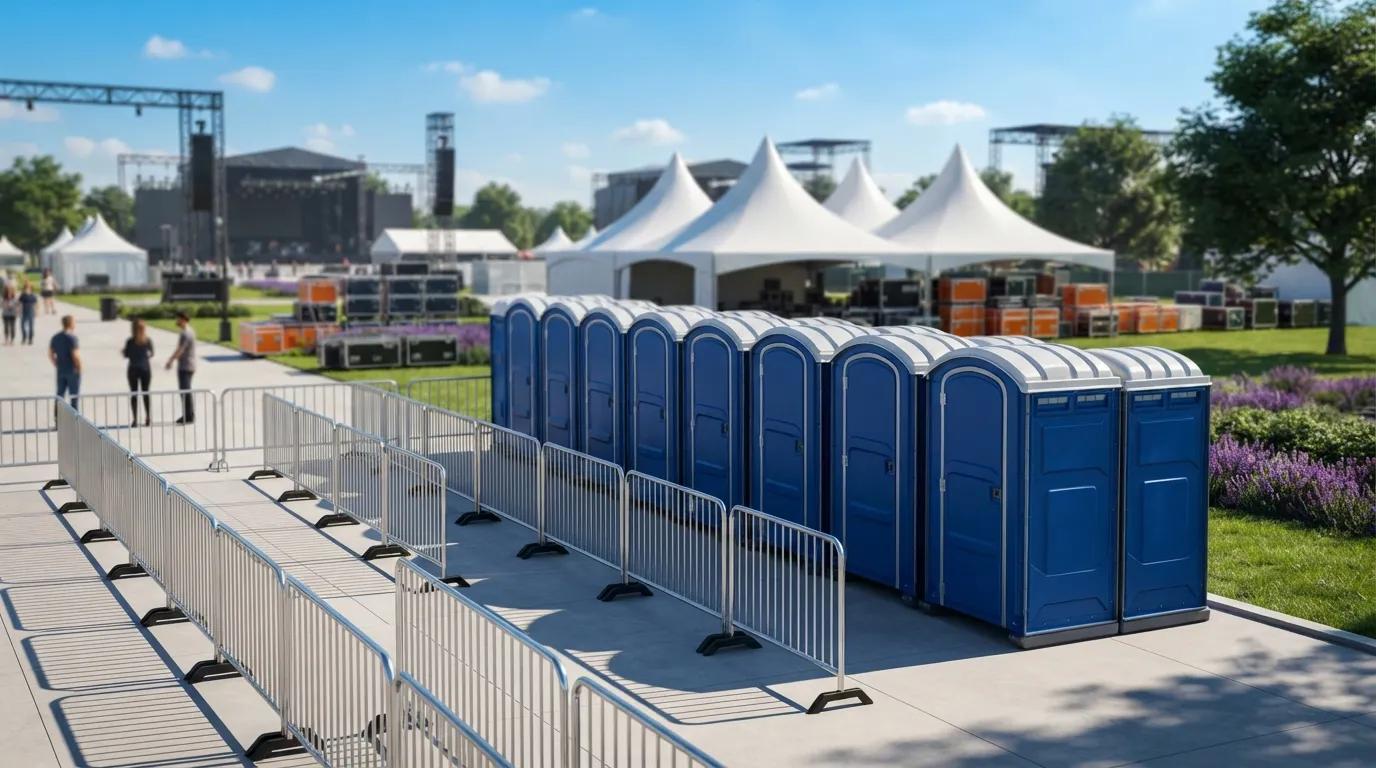
No plumbing, no electricity, nothing to hook up. The unit is a sealed box: a seat on top, a holding tank underneath, and a vent stack that pulls odor up and out instead of into the stall. When you sit down, gravity does the work. Waste drops into the tank below, where a blue chemical mix breaks down solids and knocks back the smell until service day. A standard porta potty rental runs about 44 by 48 inches on the ground and stands roughly 92 inches tall, so it fits in tight side yards and job site corners without needing a crane to place it. Fort Lauderdale Porta Pros checks tank levels on a set route, and the industry baseline under ANSI/PSAI Z4.3 is one service visit a week for up to 10 users across a 40 hour week. Busier sites need more visits, not more chemical. If you're staging a wedding, a marathon, or a weekend build, you can size the visit schedule up front rather than guessing mid-event. For anyone comparing options, the porta john rental and portable toilet rental pages break down the same mechanics in different unit styles.
How Does a Portable Sink Work?
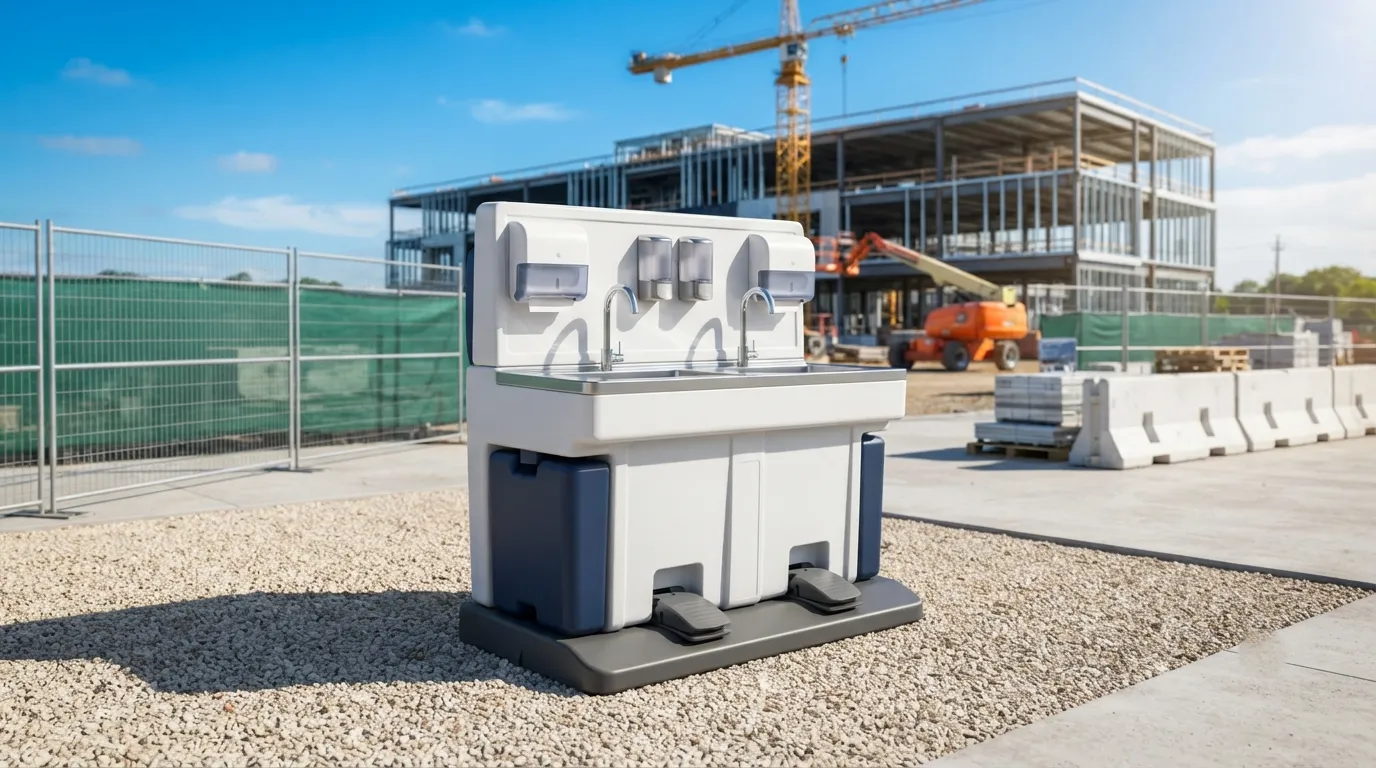
A portable sink runs on a self-contained fresh water tank, a foot pump or hand pump, and a separate gray water tank underneath to catch what drains out. There's no plumbing tie-in, so it works anywhere a crew or a food vendor needs it. Under 29 CFR 1910.141(d)(2), washing facilities need soap and towels or a hand-drying device, hand sanitizer doesn't satisfy that. A handwashing station rental pairs well with any restroom order, and a portable sink rental unit works better where food service or paint and coating work is happening. If your crew is applying paints, coatings, herbicides or insecticides, OSHA 1926.51(f)(1) requires washing facilities on-site for that specific work, not general cleanup. Fort Lauderdale job sites near Oakland Park, about 3.2 miles north, and Plantation, 9.1 miles west, order sinks alongside toilets for exactly that reason. Check the hand sanitizer station rental page if you just need a low-cost supplement, and the handwashing requirements page if you're not sure which rule applies to your crew.
How Do Flushable Porta Potties Work?
A flushable unit, sometimes called a deluxe model, uses a small onboard water tank and a foot pump or hand pump to push a rinse of water through the bowl after each use, instead of relying on gravity and chemical alone. The waste still goes into a sealed holding tank below, same as a standard unit, but the bowl stays cleaner between services. That's the difference customers notice fastest, and it's why weddings and office sites near downtown Fort Lauderdale tend to request the deluxe upgrade over the standard model. The deluxe flushable porta potty page has the specific features. For accessible placement, ADA Standards section 213.2 requires that where single-user units are clustered, at least 5 percent must be ADA accessible, with a minimum of one unit regardless of cluster size. Accessible units also need a 60 inch turning circle per ADA 304.3.1 and a 32 inch minimum clear door opening under ADA 404.2.3. See the ADA accessible porta potty page for full specs, or ADA restroom requirements for the compliance side of an event or job site plan.
Do Camping Porta Potties Work the Same Way?
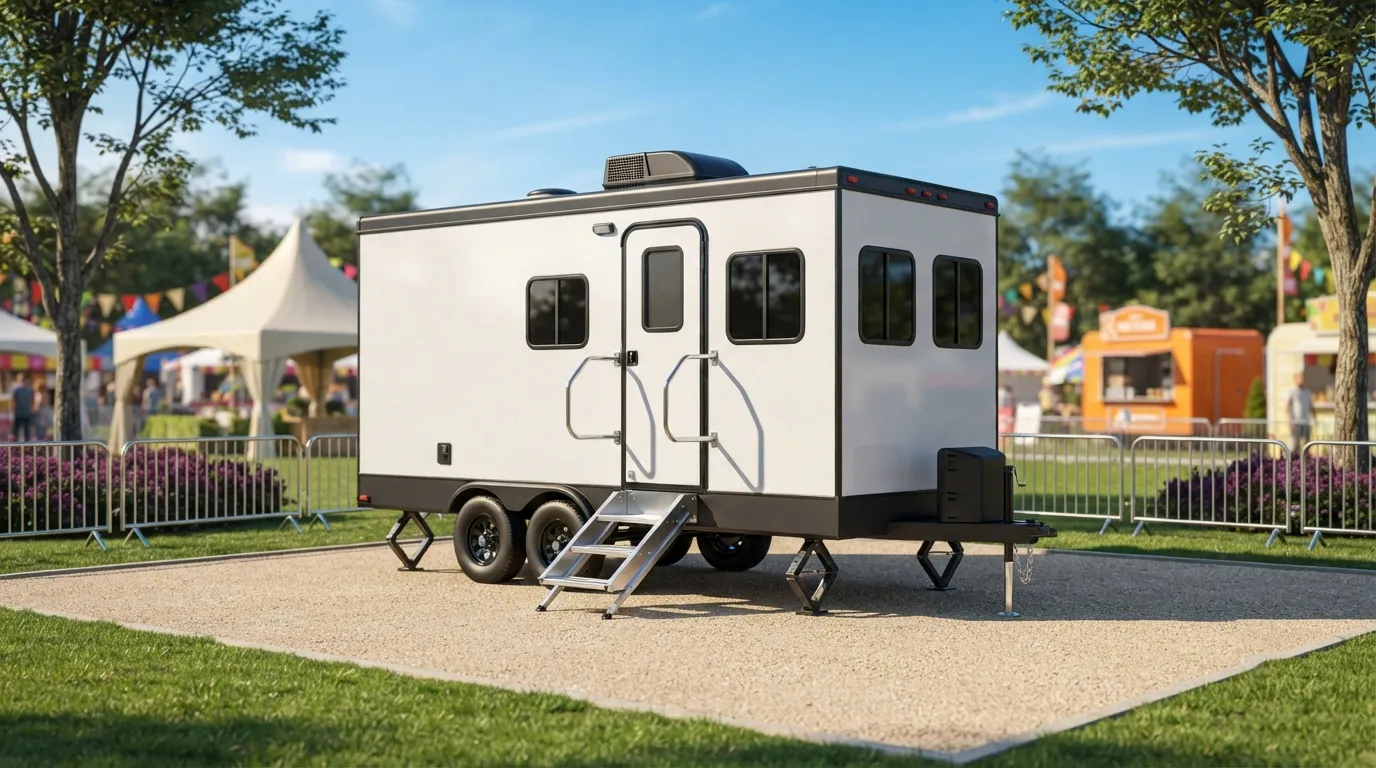
Yes, the mechanics are identical, sealed tank, chemical treatment, vented stack, no water line required. What changes for camping is placement and access. Sites near water, wooded terrain, or limited road access in and around Fort Lauderdale need a stable, level pad, since floor and ground surfaces have to stay firm and slip resistant under ADA Standards section 302.1, a good rule of thumb even for non-ADA placement. Delivery trucks generally need about 60 feet of straight clearance behind the unit's drop point, which matters if you're setting up near a wooded lot or a tight campsite entrance rather than an open lot. The camping porta potty page covers remote-site delivery logistics, and the porta potty placement guide walks through ground conditions and clearance in more detail. For events spread over several campsites or a multi-day festival, check the festival restroom rental page for unit counts by expected headcount.
FAQ
Do porta potties smell?
They shouldn't, if serviced on schedule. The vent stack and chemical treatment are built to control odor between pumps, and ANSI/PSAI Z4.3 sets a weekly service baseline for up to 10 users. Heavier use needs more frequent visits. See do porta potties smell for details on what causes it anyway.
How often are porta potties cleaned?
Standard service intervals follow the ANSI/PSAI Z4.3 baseline of once weekly for lighter use, with higher-traffic construction sites or events scheduled more often. Fort Lauderdale Porta Pros sets the schedule around your headcount, not a flat default. Full details are on how often are porta potties cleaned.
How many porta potties does a construction site need?
OSHA 1926.51(c) sets the ratio: one toilet for 20 or fewer workers, then one toilet and one urinal per 40 workers up to 200. Every construction worker running to a porta-potty during a break should have one within reasonable walking distance. See how many porta potties do I need for a full breakdown by crew size.
What chemicals go in a porta potty?
A blue deodorizing solution breaks down waste and controls odor in the holding tank. It's different from septic tank cleaning chemicals used for a home system, which target a 1,000-gallon-class tank rather than a 60 to 70 gallon portable unit. Ask about restocking on septic tank cleaning if you're maintaining a home system too.
Can a porta potty be placed on pavement or grass?
Yes, either works, but the surface needs to be level and stable, consistent with the firm, slip-resistant surface standard in ADA 302.1. Grass that's soft or sloped can tip a unit under heavy use. The porta potty placement guide covers ground prep for both surface types in more depth.
Next step
Get a delivery date
Tell us the address, the dates and the headcount. We size the order and confirm the route.